







Hong Kong’s concertgoers may have discovered the city’s newest fairytale rule. Cinderella’s party ends at midnight. At Kai Tak Main Stadium, apparently, the magic risks expiring at 10:30pm, sharp.
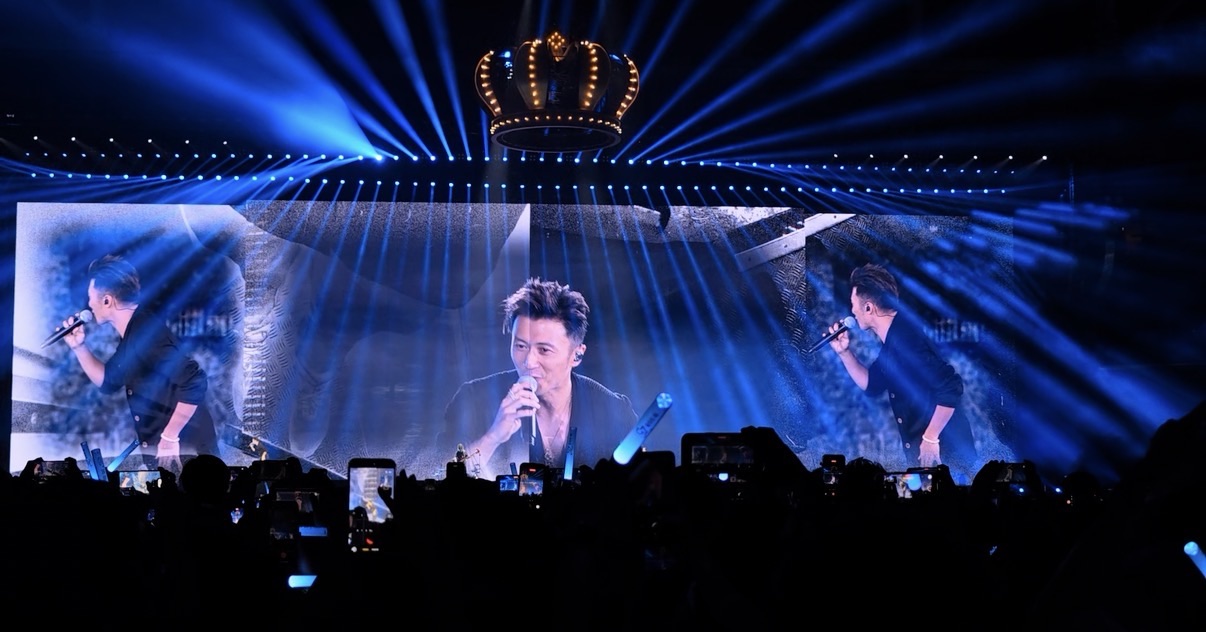
The second night of the 25+ EEG Stars Concert continued at Kai Tak Main Stadium on May 4, featuring a star-studded Emperor Entertainment line-up including Joey Yung, Leo Ku, Hacken Lee, Twins, Gin Lee, Kenny Kwan, Ken Hung and Vincy Chan. But the night’s biggest draw was Nicholas Tse, the label’s “big brother”, who had returned to Hong Kong after completing his Chengdu concert and formally rejoined the Kai Tak show.
Yet what was expected to be a major highlight quickly became the source of the evening’s strangest anticlimax. Tse performed Jade Butterfly, bowed, and left the stage. Despite the crowd chanting “encore”, no one returned. A medley reportedly listed in the pre-circulated rundown, including Viva, Qian Long Wu Yong and Don’t Lie, also disappeared from the show.
The concert ended at around 10:20pm, more than half an hour earlier than the first night, according to audience accounts circulating online. For a concert marketed on nostalgia, star power and the weight of a 25-year entertainment empire, the ending felt to some fans less like a finale than a venue evacuation drill with better lighting.
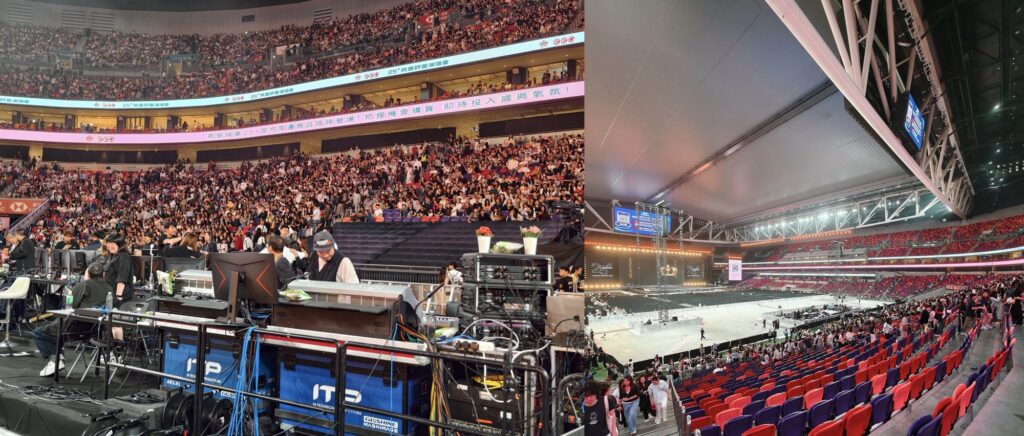
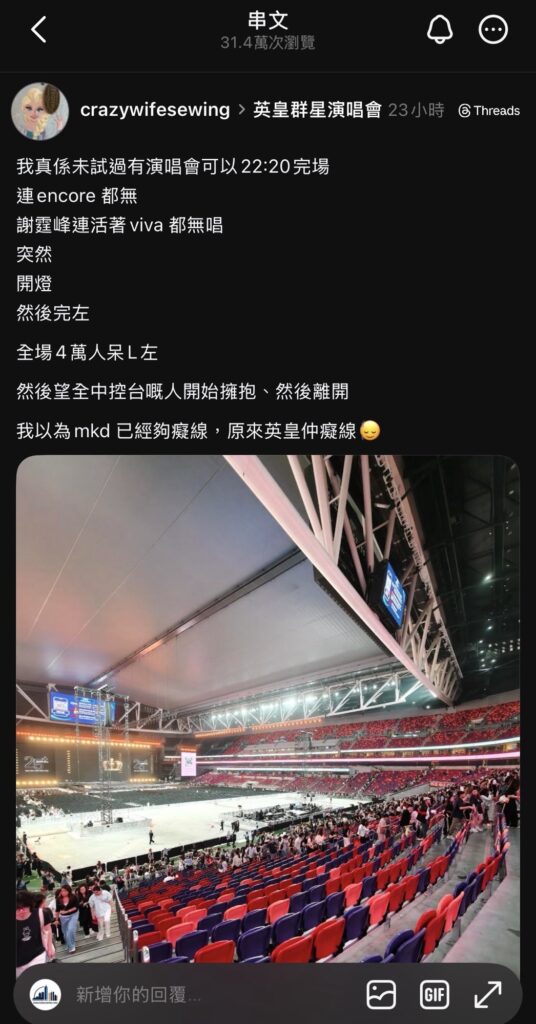
Numerous users on RedNote and Threads have also criticised their concert experience. One Threads post, which drew more than 300,000 views and nearly 3,000 likes, said the writer was left in shock alongside much of the 40,000-strong audience when Tse unexpectedly left the stage at around 10:20pm. Speaking to HK Business Wire, the user, who described herself as a long-time fan of both Twins and Nicholas Tse, said she was deeply disappointed by the arrangement. She described the experience as “super traumatic” and said she would be unlikely to attend future concerts organised by EEG.
After the show, Emperor Entertainment responded to media enquiries by saying the song list received by reporters was only Tse’s preliminary song list. The company said Tse had only returned to Hong Kong from Chengdu that morning and had not been able to attend rehearsal in time. After arriving at the venue, he was allowed to choose his own song list, the company said.
That explanation may address why Tse’s own segment was shortened. It does not fully settle the wider question now dominating online discussion: did Kai Tak’s operating rules play any role in the show’s unusually early ending?
On social media and discussion forums, some users claimed that Kai Tak Main Stadium has an informal or formal requirement for concerts to end by 10:30pm, with speculation that organisers who overrun could face penalties, reputational consequences, or even be “blacklisted” from future venue bookings.
HK Business Wire submitted a media enquiry to Kai Tak Sports Park before publication, asking whether a 10:30pm end-time requirement exists, whether overtime penalties apply, whether any “blacklist” mechanism is in place for organisers, and whether an organiser’s past performance or public reputation would affect future venue bookings.
As of our editorial deadline, Kai Tak Sports Park had not responded.
For a venue positioned as Hong Kong’s new world-class stage for mega events, the silence was perhaps its own form of performance. The stadium may be built for global spectacles, but its communications operation, at least on this occasion, did not appear ready for the encore.
The controversy lands at an awkward moment for Hong Kong’s new flagship venue. Kai Tak Sports Park has been positioned as a key pillar in the city’s effort to attract mega events, international concerts and large-scale entertainment spectacles. The venue is not merely a stadium. It is supposed to be proof that Hong Kong can compete with Singapore, Tokyo, Seoul, Bangkok and other regional entertainment hubs for the world’s biggest touring acts.
But mega shows do not always fit neatly into office-hour logic. International pop concerts are built around scale, suspense and flexibility. Encores are not afterthoughts. They are part of the emotional contract between performer and audience. A show that ends before the audience has finished shouting for more may be operationally tidy, but commercially and culturally, it can feel unfinished.
This is where Kai Tak’s growing pains become a bigger industry question. If Hong Kong wants Taylor Swift, Lady Gaga, Beyoncé, Coldplay, Ed Sheeran or other global stadium acts, the city must understand that world tours are not simply venue bookings with louder speakers. They are tightly produced, high-expectation global events where audience experience, runtime, crowd flow, transport arrangements and late-night flexibility all form part of the product.
Recent examples show how global pop productions often stretch well beyond a 10:30pm finish. Lady Gaga shows, assuming an 8:00pm showtime, are often reported to end around 11:00pm to 11:30pm. In some recent accounts, she has started roughly 30 to 45 minutes late and performed for about two and a half hours, putting the finish time closer to 11:15pm or even midnight in certain cities.
Taylor Swift’s The Eras Tour also underlines the scale of modern stadium touring. Her shows typically lasted around three hours and 10 to 15 minutes, with venue listings and fan reports commonly placing end times between about 10:30pm and 11:10pm, depending on the city, start time and local arrangements.
In other words, a 10:30pm finish may be manageable for some concerts. But if treated as a rigid ceiling for every mega show, it risks becoming a creative and commercial constraint. For a global pop star with a tightly designed set, costume changes, stage transitions, speeches, surprise songs or encore sections, 10:30pm is not merely a time. It is an editorial decision imposed by the clock.
The question is not whether Hong Kong should ignore neighbourhood concerns, transport capacity or crowd dispersal. It should not. Kai Tak is a new district-scale venue with residential communities, rail connections, bus arrangements and crowd-management pressures that differ from the Hong Kong Coliseum. But if the city’s answer to mega-event complexity is a hard stop at 10:30pm, then the ambition to become a regional concert capital may need a reality check.
Fans are already drawing comparisons with the Hong Kong Coliseum, where concerts have historically run past 11pm on some occasions. The Coliseum has long been part of Hong Kong’s pop culture machinery, and audiences are used to the ritual of encore, banter, extended medleys and emotional closing segments. By contrast, Kai Tak is still trying to build its identity. The risk is that it becomes known not for spectacle, but for curfew anxiety.
The 25+ EEG Stars Concert controversy also exposes another problem in Hong Kong’s live entertainment market: expectation management. When a star-studded concert circulates a rundown, even unofficially or preliminarily, audiences naturally build expectations. If segments disappear, especially involving the most anticipated performer of the night, the gap between what fans thought they were buying and what they received becomes the story.
That gap is where disappointment turns into suspicion. Was it the artiste’s schedule? Was it the organiser’s planning? Was it rehearsal time? Was it the venue’s operating rule? Was it transport pressure? Was it a curfew? In the absence of clear explanations, the audience will write its own ending, and usually not a generous one.
For organisers, the lesson is brutal but simple. If a segment is not confirmed, do not let it become part of public expectation. If a performer has just flown in from another city and cannot rehearse, say so early. If the rundown is subject to change, make that obvious. Concertgoers can accept changes. They are less forgiving when the show appears to shrink in real time.
For Kai Tak, the issue is equally urgent. A world-class venue needs world-class transparency. If there is a 10:30pm requirement, say so. If there is flexibility, explain how it works. If overtime charges apply, disclose the principle. If repeated overruns affect future bookings, clarify the criteria. And if no blacklist exists, the venue should kill the rumour before the rumour becomes the brand.
Hong Kong does not lack performers, fans or demand. What it needs is a live entertainment ecosystem mature enough to handle the scale it now claims to want. Mega shows require more than a big stadium. They require trust between venue, organiser, performer and audience.
For now, the moral of the story is darker than the fairytale. Cinderella had until midnight. Hong Kong concertgoers, it seems, may need to check whether their encore has been approved before 10:30pm.