








The Hospital Authority (HA) said today that reforms to public healthcare fees and charges, introduced at the beginning of the year, have significantly strengthened protections for poor, acute, serious and critical patients, while enhancing efficiency and reducing waste.
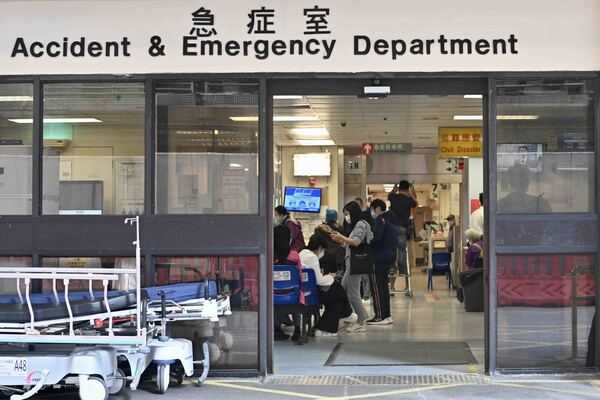
It added that the performance of Accident and Emergency Departments (A&Es) has also improved.
In the first half of this year, a total of 913,248 attendances were recorded across the 18 A&Es under the HA, representing a 3.9% decrease compared with the same period last year. Relevant targets were met for Triage Category I (Critical) and Category II (Emergency) cases, which together accounted for 44,522 attendances. These were fully exempted from A&E fees under the new fees and charges mechanism.
The proportion of Triage Category III (Urgent) cases treated within 30 minutes, a service pledge, increased from 81.4% to 88.5%, with the average waiting time falling from 23 to 20 minutes.
Triage Category IV (Semi-urgent) and Category V (Non-urgent) cases decreased by about 10%, with non-urgent cases dropping by approximately 20%.
The number of beneficiaries of medical fee waivers has surged. As of June 30, the HA had received 289,799 applications for waivers, of which 264,087 were approved. This means the approval rate exceeded 90%, which is nearly 19 times the number of patients (approximately 14,000) who received medical fee waivers in the full year prior to the reforms.
In addition, the HA has introduced an annual cap of $10,000 on spending by patients. This provides members of the public with more comprehensive protection from impoverishment due to illness. As of June 30, the 10,595 patients whose applications have been approved will have all further eligible medical fees for the remainder of this financial year fully waived.
The reforms also increased subsidies for the application of innovative drugs and medical devices for critical patients.
Over the past six months, the HA has incorporated 16 new drugs into the HA Drug Formulary, including seven targeted therapy drugs for cancer treatment. Among these, six were included in the Special Drugs category, meaning patients only need to pay the standard drug fee of $20 every four weeks under specific clinical scenarios.
Moreover, the reforms relaxed the financial assessment criteria for Samaritan Fund (SF) subsidies, aiming to strengthen drug and medical device support for critical patients, including those from middle-income families.
Compared with the first half of last year, the approved subsidy amounts for drug and non-drug items under the SF increased by about 22% and 10% to $1.28 billion and $220 million respectively.
The HA said the data clearly reflects the reforms are working as intended and have yielded initial results. It said it had shared its update in order to prepare for the next phase of the reforms.