








BEIJING, June 4, 2025 /PRNewswire/ — May 30, 2025 marks the ninth National Science and Technology Workers Day. In the early morning of the previous day, Tianwen-2, the country’s first asteroid probe and sampling mission, soared into the sky, carrying with it humanity’s aspirations for the stars and the universe.
The nation will thrive when science and technology develops, and the country will be strong when science and technology becomes advanced. The book series of Xi Jinping: The Governance of China contains multiple important speeches on science and technology. In the article “Strive for Greater Strength and Self-Reliance in Science and Technology” included in the fourth volume of the book series, President Xi emphasized that science and technology respond to the call of the times and have a global impact; they belong to all of humanity. “We should participate to the full in global science and technology governance, contribute Chinese wisdom, and shape a philosophy of technology for good purposes, so that science and technology better serve human wellbeing, and enable China’s science and technology industry to contribute more to building a global community of shared future!”
In the fifth installment of the “Decoding the Book of Xi Jinping: The Governance of China” series, the Global Times, along with People’s Daily Overseas Edition, focuses on the theme of “practicing the philosophy of technology for good purposes and polishing China’s new name card in scientific and technological innovation.” We continue to invite Chinese and international scholars, translators of the work, practitioners of its concepts, and overseas readers to share their insights, understandings and reflection on China’s philosophy of science and technology development and international cooperation.
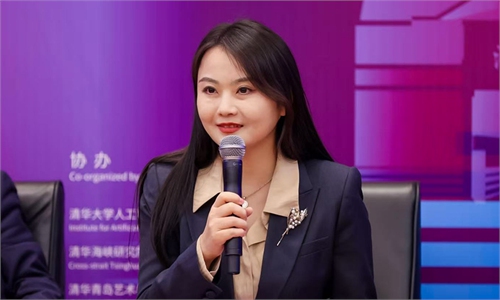
In the fourth article of the “Scholars’ Perspectives” column, which comprises interviews with and signed articles from renowned scholars across various countries, Global Times (GT) reporter Liu Caiyu and Chen Qingqing talked to Zhang Linghan, a professor from China University of Political Science and Law who is also a member of the UN High-Level Advisory Body on Artificial Intelligence.
Global Times: Addressing a meeting conflating the general assemblies of the members of the Chinese Academy of Sciences and the Chinese Academy of Engineering, and the national congress of the China Association for Science and Technology on May 28, 2021, Chinese President Xi Jinping said “We should participate to the full in global science and technology governance, contribute Chinese wisdom, and shape a philosophy of technology for good purposes, so that science and technology better serve human wellbeing, and enable China’s science and technology industry to contribute more to building a global community of shared future.” Today, as human beings step into the AI era, how do you interpret the concept of “technology for good purposes” that the Chinese leader has mentioned? How can we practice this concept?
Zhang Linghan: China’s concept of “technology for good purposes” can be understood from three perspectives. First is the positive development of technology itself. For example, the development of artificial intelligence technology in China has always adhered to the principles of “people-centered” and “intelligence for good,” emphasizing that technology is a tool for serving humanity. Its development must align with the overall interests of humanity, ethical norms, and long-term well-being, highlighting the importance of “safety, reliability, and controllability” in the research, development, and application of AI technology. On AI products and services, China has very strict corporate compliance standards, requiring companies to take on social responsibilities alongside their responsibilities for technology research, development, and application.
Secondly, empowering social development toward goodness through technology. For example, the widespread application of generative AI will liberate humanity from mechanical and repetitive labor, enabling people to engage in more creative and innovative work. In the field of public services, after the open-source release of large language models like DeepSeek, various platforms are integrating these technologies, which will promote the development of public services such as healthcare and education toward a more inclusive direction.
Thirdly, promoting the construction of a “community with a shared future for mankind” through the concept of “technology for good purposes.” The ideas of “technology for good purposes” and “community with a shared future for mankind” are rooted in the traditional culture of China and the practice of socialism with Chinese characteristics. They emphasize that the ultimate goal of technological development is to serve sustainable development and the common good of all humanity. The term “common good” takes into account the different values and practical needs of various countries. Therefore, in a world full of uncertainties, “for good purposes” serves as the greatest common denominator that transcends differences and fosters consensus.
China’s commitment to “for good purposes” is “people-centered,” insisting that AI be treated as a public product that serves all humanity. China not only hopes to enhance its national strength and improve the living standards of its people through AI but also aims to strengthen international cooperation and exchanges in the field of technology, achieving the open sharing of technological development outcomes on a global scale. In practice, it can be seen that China, as a responsible major country, has actively taken on the responsibility of helping developing countries strengthen their artificial intelligence capacity building, contributing Chinese strength to bridging the global digital divide.
Global Times: On the afternoon of April 25, 2025, the Political Bureau of the Communist Party of China (CPC) Central Committee held its 20th group study session, which focused on strengthening the development and regulation of artificial intelligence (AI). While presiding over the session, Xi Jinping, general secretary of the CPC Central Committee, said in the face of the rapid evolution of new-generation AI technologies, China must fully leverage the strengths of the new system for mobilizing the resources nationwide, achieve self-reliance and strength in this regard, and prioritize practical application so as to promote the healthy and orderly development of AI in the country in a beneficial, safe and fair manner. In your opinion, how does China’s new system for mobilizing the resources nationwide help our country achieve self-reliance and self-strengthening in science and technology? With this system, what advantages does China have in AI technology?
Zhang Linghan: In recent years, the advantages of China’s new system for mobilizing the resources nationwide have become quite evident. Essentially, AI is a resource-intensive industry that requires vast amounts of data, complex algorithms, and powerful computing capabilities. Achieving self-reliance in AI not only requires advanced technologies but also sufficient resource investment and energy security. This places high demands on technology, funding, human resources, and energy, thereby highlighting the significant institutional advantages of the new type of national system in terms of its overall coordination, prudence, and foundational nature.
In promoting technological breakthroughs, the government can start from the overall national interest and systematically plan the path for technological innovation. This approach can overcome the short-term behaviors of the market in fundamental and cutting-edge technology fields, allowing for the concentration of human, financial, and material resources to rapidly and efficiently advance the research and development of core technologies. It helps to avoid resource dispersion and redundant waste, especially for high-difficulty, high-investment, and strategic projects, such as the BeiDou Navigation System and the Chang’e lunar exploration program, which both fall into this category.
In terms of promoting industrial development, taking electric power resources as an example, the development of AI, which includes data storage and processing, algorithm operation, and model training, relies heavily on power support. China has built a globally leading green power infrastructure system. In 2023, China’s total electricity generation ranked first in the world, and it has maintained stable growth in 2024. This provides a solid and environmentally friendly foundation for the development of the AI industry.
In terms of enhancing security guarantees, China emphasizes achieving a “strategic balance” between development and governance. To adapt to the uncertainties brought about by the rapid development of the AI industry, we have introduced an “adaptive governance” concept that combines flexibility and foresight, ultimately aiming for a situation where the technology development is both healthy, safe and reliable.
Global Times: Let’s talk about how China can engage more deeply in global science and technology governance. As a member of the UN High-Level Advisory Body on Artificial Intelligence, how would you assess China’s current level of participation in global tech governance based on your experience? What are the bottlenecks? Could you share some insights from your own experience?
Zhang Linghan: In my personal view, China is already firmly in the top tier of global science and technology governance, especially in the field of AI. From groundbreaking technological advances like DeepSeek that have captured global attention, to the widespread application of AI across industries, and active participation in shaping international norms on multilateral platforms such as the UN, China is deeply engaged and making significant contributions. In many areas, its role has become increasingly indispensable.
The UN High-Level Advisory Body on AI is composed of 39 experts in the AI field from 33 countries and a wide range of industries. Since its establishment, we have held over 100 online meetings and three in-person sessions. Within the UN system, many other international organizations—such as UNESCO, the International Telecommunication Union, and the World Intellectual Property Organization—are also engaged in specialized aspects of AI governance. Through my participation in these international governance efforts, I’ve clearly felt that the perspectives and proposals from Chinese experts are increasingly being heard and valued. It is no exaggeration to say that China’s governance practices and experiences are continuously contributing innovative ideas and valuable insights to the development of a global AI governance framework.
For example, when discussing how to balance AI development with safety and how to build an adaptive governance framework, we shared governance approaches based on China’s experience—such as the “small, fast, and flexible” legislative model—which drew considerable interest and discussion among international experts. This model, explored in recent years in China, is characterized by “small scope, fast cycle, and flexible format,” aiming to precisely address real-world problems. Some Global South countries, during their own legislative processes, sought guidance and advice from Chinese experts through the UN and other international organizations. All of this highlights China’s growing engagement and contribution to the global AI governance agenda.
Behind the growing global attention lies China’s advanced governance practices and systematic experience accumulated over time in AI governance field. It is fair to say that it is the result of strategic national planning, sustained investment, and active exploration that has enabled us not only to speak with professional confidence in multilateral and bilateral dialogues, but also to expand our space for expressing views and participating in global discussions. In September 2024, world leaders adopted the Pact for the Future at the Summit of the Future, with several sections on AI governance incorporating recommendations from the UN High-Level Advisory Body. Being able to participate in such a major global governance agenda as a Chinese expert brings me a profound sense of responsibility and mission.
If we are to discuss the challenges, it must be acknowledged that the current global AI governance landscape remains noticeably fragmented. Countries differ significantly in their governance philosophies, regulatory approaches, and institutional designs. In light of this, greater attention should be given to the positive momentum of “seeking common ground while reserving differences” in global AI governance practices. A particularly illustrative example is China’s pioneering establishment of an AI labeling system, which has since been referenced and adopted by a growing number of legislative efforts in the US, the EU, and beyond—becoming an increasingly important component in the global governance toolbox.
Overall, global AI governance remains in a crucial window of opportunity. The initiatives proposed by China not only reflect the country’s distinctive governance philosophy developed through its own AI practices, but also directly address the shared concerns and practical needs of the international community—particularly those of developing countries. China’s proactive role in advancing global AI governance is helping to shape a governance architecture that is more balanced, inclusive, and beneficial for all. This, in turn, serves as a vivid example of China’s growing engagement in global science and technology governance, and its contribution of Chinese solutions and wisdom to the world.
Global Times: In recent years, accelerated technological iteration and increasing geopolitical tensions have become defining trends in the global tech landscape. On one hand, the pace of innovation is quickening, and technology is playing an increasingly pivotal role in societal transformation. On the other hand, under the influence of great-power competition and other factors, global technological development is exhibiting signs of de-globalization and fragmentation. China’s rise in science and technology has faced well-known “chokepoint” challenges. What should China do in response? Against this backdrop, how should we understand President Xi’s call for “China’s science and technology to make greater contributions to building a community with a shared future for humanity.”
Zhang Linghan: Science and technology respond to the call of the times and have a global impact; they belong to all of humanity.
President Xi proposed that China’s science and technology should make greater contributions to building a community with a shared future for humanity. In its participation in global science and technology governance, China has consistently upheld the principles of multilateralism, openness and inclusiveness, and fairness and justice. China also looks forward to working with countries around the world to build consensus through equal dialogue and sincere consultation, and to foster mutual trust through pragmatic cooperation.
In recent years, through extensive exchanges with Global South countries, I have increasingly felt their strong expectation for China to play a responsible role as a major power. These countries not only hope that China can assist them in developing AI technologies and applications to prevent the widening of the technological divide, but more importantly, they see in China’s vision of a “community with a shared future for mankind” a future for AI that is truly open, secure, trustworthy, and beneficial to all of humanity.
During the training programs I have participated in with officials and entrepreneurs from BRICS nations and Belt and Road partner countries, I often notice a surge of interest and engagement after introducing China’s AI governance philosophy, core values, and successful experiences. Many of the participants are especially eager to learn from China’s approach to AI governance, industrial development models, and digital infrastructure building, hoping to apply these experience to their own national development. It fills me with pride to see that China’s ideas, systems, and development path are being increasingly recognized and welcomed by a growing number of countries.