






• About
  • Advertise
  • Privacy & Policy
  • Contact
HK Businesswire
  • Home
  • News
    • All
    • Business
    • Politics
    • PR Newswire
    • Science
    • World

    Banking sector looks to fund Central Asia’s boom

    Haier Biomedical Achieves Double No. 1 Ranking in Euromonitor’s Global Life Science Lab Equipment Report, Caps Three-Phase Global Expansion

    Haier Biomedical Achieves Double No. 1 Ranking in Euromonitor’s Global Life Science Lab Equipment Report, Caps Three-Phase Global Expansion

    Principal in swearing case submits resignation

    Unikeyic Electronics Ranked No. 19 on Supply Chain Connect’s 2026 Top 50 Global Electronics Distributors List

    Unikeyic Electronics Ranked No. 19 on Supply Chain Connect’s 2026 Top 50 Global Electronics Distributors List

    Acer Expands Gaming Portfolio With Predator Atlas 8 Handheld Powered by Intel

    Acer Expands Gaming Portfolio With Predator Atlas 8 Handheld Powered by Intel

    Acer Broadens Portfolio with Two New Laptops Powered by the Latest Snapdragon Processors

    Acer Broadens Portfolio with Two New Laptops Powered by the Latest Snapdragon Processors

    Trending Tags

    • Trump Inauguration
    • United Stated
    • White House
    • Market Stories
    • Election Results
  • PR Newswire
  • Business
  • World
  • Entertainment
  • Sports
  • Tech
    • All
    • Apps
    • Gadget
    • Mobile
    • Startup

    Xiaomi Cuts MiMo-V2.5 API Prices by Up to 99% Worldwide

    Hong Kong Medical Implant Firm Koln 3D to Expand into Central Asia

    Hong Kong Sets Cap on Ride-Hailing Cars in Landmark Regulatory Move

    Alipay Launches AI Wallet and Token Pay After Completing 300 Million AI Transactions

    Xiaomi Unveils YU7 GT SUV and Full Smart Ecosystem Expansion in Beijing

    Li Ka Shing Foundation to Fund Histotripsy Treatment for 200 Liver Cancer Patients in Hong Kong

    Trending Tags

    • Nintendo Switch
    • CES 2017
    • Playstation 4 Pro
    • Mark Zuckerberg
  • Feature
No Result
View All Result
  • Home
  • News
    • All
    • Business
    • Politics
    • PR Newswire
    • Science
    • World

    Banking sector looks to fund Central Asia’s boom

    Haier Biomedical Achieves Double No. 1 Ranking in Euromonitor’s Global Life Science Lab Equipment Report, Caps Three-Phase Global Expansion

    Haier Biomedical Achieves Double No. 1 Ranking in Euromonitor’s Global Life Science Lab Equipment Report, Caps Three-Phase Global Expansion

    Principal in swearing case submits resignation

    Unikeyic Electronics Ranked No. 19 on Supply Chain Connect’s 2026 Top 50 Global Electronics Distributors List

    Unikeyic Electronics Ranked No. 19 on Supply Chain Connect’s 2026 Top 50 Global Electronics Distributors List

    Acer Expands Gaming Portfolio With Predator Atlas 8 Handheld Powered by Intel

    Acer Expands Gaming Portfolio With Predator Atlas 8 Handheld Powered by Intel

    Acer Broadens Portfolio with Two New Laptops Powered by the Latest Snapdragon Processors

    Acer Broadens Portfolio with Two New Laptops Powered by the Latest Snapdragon Processors

    Trending Tags

    • Trump Inauguration
    • United Stated
    • White House
    • Market Stories
    • Election Results
  • PR Newswire
  • Business
  • World
  • Entertainment
  • Sports
  • Tech
    • All
    • Apps
    • Gadget
    • Mobile
    • Startup

    Xiaomi Cuts MiMo-V2.5 API Prices by Up to 99% Worldwide

    Hong Kong Medical Implant Firm Koln 3D to Expand into Central Asia

    Hong Kong Sets Cap on Ride-Hailing Cars in Landmark Regulatory Move

    Alipay Launches AI Wallet and Token Pay After Completing 300 Million AI Transactions

    Xiaomi Unveils YU7 GT SUV and Full Smart Ecosystem Expansion in Beijing

    Li Ka Shing Foundation to Fund Histotripsy Treatment for 200 Liver Cancer Patients in Hong Kong

    Trending Tags

    • Nintendo Switch
    • CES 2017
    • Playstation 4 Pro
    • Mark Zuckerberg
  • Feature
No Result
View All Result
HK Businesswire
No Result
View All Result
Home News Science

How nature organizes itself, from brain cells to ecosystems

Purton by Purton
10 March 2025
in Science
0
How nature organizes itself, from brain cells to ecosystems
0
SHARES
11
VIEWS
Share on FacebookShare on Twitter

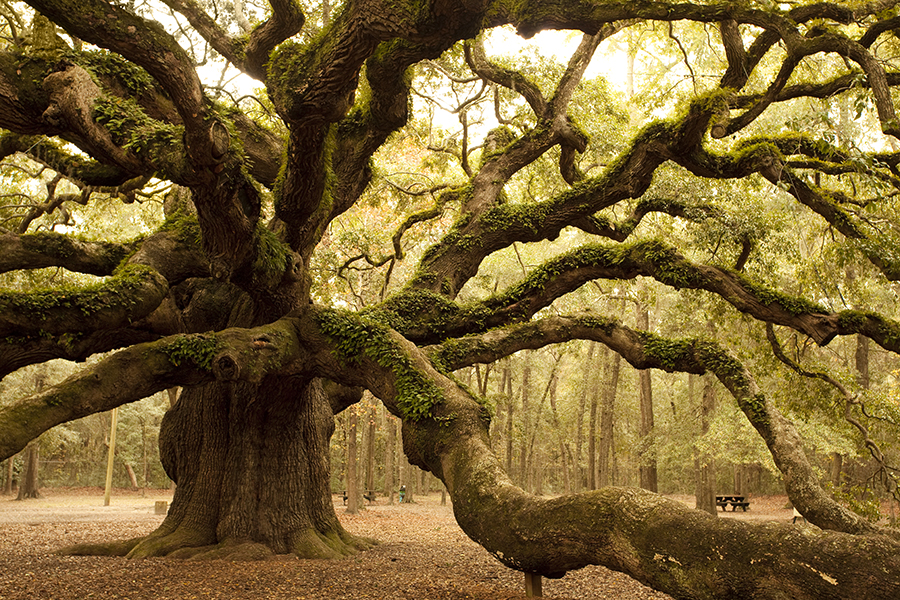
Look around, and you’ll see it everywhere: the way trees form branches, the way cities divide into neighborhoods, the way the brain organizes into regions. Nature loves modularity — a limited number of self-contained units that combine in different ways to perform many functions. But how does this organization arise? Does it follow a detailed genetic blueprint, or can these structures emerge on their own?

A new study from MIT Professor Ila Fiete suggests a surprising answer.

In findings published Feb. 18 in Nature, Fiete, an associate investigator in the McGovern Institute for Brain Research and director of the K. Lisa Yang Integrative Computational Neuroscience (ICoN) Center at MIT, reports that a mathematical model called peak selection can explain how modules emerge without strict genetic instructions. Her team’s findings, which apply to brain systems and ecosystems, help explain how modularity occurs across nature, no matter the scale.

Joining two big ideas

“Scientists have debated how modular structures form. One hypothesis suggests that various genes are turned on at different locations to begin or end a structure. This explains how insect embryos develop body segments, with genes turning on or off at specific concentrations of a smooth chemical gradient in the insect egg,” says Fiete, who is the senior author of the paper. Mikail Khona PhD ’25, a former graduate student and K. Lisa Yang ICoN Center graduate fellow, and postdoc Sarthak Chandra also led the study.

Another idea, inspired by mathematician Alan Turing, suggests that a structure could emerge from competition — small-scale interactions can create repeating patterns, like the spots on a cheetah or the ripples in sand dunes.

Both ideas work well in some cases, but fail in others. The new research suggests that nature need not pick one approach over the other. The authors propose a simple mathematical principle called peak selection, showing that when a smooth gradient is paired with local interactions that are competitive, modular structures emerge naturally. “In this way, biological systems can organize themselves into sharp modules without detailed top-down instruction,” says Chandra.

Modular systems in the brain

The researchers tested their idea on grid cells, which play a critical role in spatial navigation as well as the storage of episodic memories. Grid cells fire in a repeating triangular pattern as animals move through space, but they don’t all work at the same scale — they are organized into distinct modules, each responsible for mapping space at slightly different resolutions.

No one knows how these modules form, but Fiete’s model shows that gradual variations in cellular properties along one dimension in the brain, combined with local neural interactions, could explain the entire structure. The grid cells naturally sort themselves into distinct groups with clear boundaries, without external maps or genetic programs telling them where to go. “Our work explains how grid cell modules could emerge. The explanation tips the balance toward the possibility of self-organization. It predicts that there might be no gene or intrinsic cell property that jumps when the grid cell scale jumps to another module,” notes Khona.

Modular systems in nature

The same principle applies beyond neuroscience. Imagine a landscape where temperatures and rainfall vary gradually over a space. You might expect species to be spread, and also to vary, smoothly over this region. But in reality, ecosystems often form species clusters with sharp boundaries — distinct ecological “neighborhoods” that don’t overlap.

Fiete’s study suggests why: local competition, cooperation, and predation between species interact with the global environmental gradients to create natural separations, even when the underlying conditions change gradually. This phenomenon can be explained using peak selection — and suggests that the same principle that shapes brain circuits could also be at play in forests and oceans.

A self-organizing world

One of the researchers’ most striking findings is that modularity in these systems is remarkably robust. Change the size of the system, and the number of modules stays the same — they just scale up or down. That means a mouse brain and a human brain could use the same fundamental rules to form their navigation circuits, just at different sizes.

The model also makes testable predictions. If it’s correct, grid cell modules should follow simple spacing ratios. In ecosystems, species distributions should form distinct clusters even without sharp environmental shifts.

Fiete notes that their work adds another conceptual framework to biology. “Peak selection can inform future experiments, not only in grid cell research but across developmental biology.”


Tags: Science
Purton

Purton

Read More

Key Chemistry Question Answered, No Quantum Computer Required

29 May 2026

New laboratory at MIT aims to advance quantum research for the nation

28 May 2026
  • Trending
  • Comments
  • Latest

Tongcheng Travel Achieves Revenue of 5 Billion in 2026Q1 Growing User Base and APUs Increases to 254 Million

21 May 2026

USC Thornton Chamber Singers Make Hong Kong Debut at Inter-School Choral Festival

26 May 2026
CodeCoin Named World Finance Forum “Tech Innovation Growth Enterprise”; Compliant Digital Payment Infrastructure Gains Industry Recognition

CodeCoin Named World Finance Forum “Tech Innovation Growth Enterprise”; Compliant Digital Payment Infrastructure Gains Industry Recognition

26 May 2026

10 hurt as turbulence hits Cathay flight from Brisbane

23 May 2026

Banking sector looks to fund Central Asia’s boom

28 May 2026
Haier Biomedical Achieves Double No. 1 Ranking in Euromonitor’s Global Life Science Lab Equipment Report, Caps Three-Phase Global Expansion

Haier Biomedical Achieves Double No. 1 Ranking in Euromonitor’s Global Life Science Lab Equipment Report, Caps Three-Phase Global Expansion

28 May 2026

Principal in swearing case submits resignation

28 May 2026
Unikeyic Electronics Ranked No. 19 on Supply Chain Connect’s 2026 Top 50 Global Electronics Distributors List

Unikeyic Electronics Ranked No. 19 on Supply Chain Connect’s 2026 Top 50 Global Electronics Distributors List

28 May 2026

Recent News

Banking sector looks to fund Central Asia’s boom

28 May 2026
Haier Biomedical Achieves Double No. 1 Ranking in Euromonitor’s Global Life Science Lab Equipment Report, Caps Three-Phase Global Expansion

Haier Biomedical Achieves Double No. 1 Ranking in Euromonitor’s Global Life Science Lab Equipment Report, Caps Three-Phase Global Expansion

28 May 2026

Principal in swearing case submits resignation

28 May 2026
Unikeyic Electronics Ranked No. 19 on Supply Chain Connect’s 2026 Top 50 Global Electronics Distributors List

Unikeyic Electronics Ranked No. 19 on Supply Chain Connect’s 2026 Top 50 Global Electronics Distributors List

28 May 2026
HK Businesswire

Stay ahead with the latest insights on Hong Kong’s economy, finance, and investments. From market trends to policy updates, we bring you in-depth analysis and expert opinions.

📩 Subscribe to our newsletter for exclusive updates.
📍 Follow us on social media for real-time news.
📧 Contact us: info@hongkong-invest.com

Follow Us

  • About
  • Advertise
  • Privacy & Policy
  • Contact

© 2025 by HKBusinesswire.com

No Result
View All Result

© 2025 by HKBusinesswire.com