





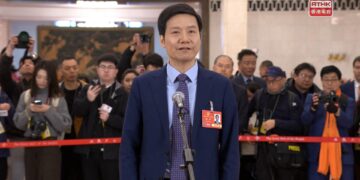


Speaking on a radio programme, Yue pointed out that the nation’s 15th Five-Year Plan has, for the first time, promoted the concept of “building a financial powerhouse” as a long-term strategic goal.
He said Hong Kong’s task in this roadmap is to ramp up the use of the renminbi within international markets, adding that banks in the SAR have a role to play.
“Banks are quite positive, and they are treating this as a tremendous business opportunity instead of a requirement. Their customers also have the need because everyone wants diversification to spread risk,” he said.
“Whether the customers are from Hong Kong or, in particular, the Middle East or Asean, they used to just trade in US dollars. They now want to use one more currency but might not know how to do so, which is why their banks have the responsibility to teach them.”
As an offshore hub, Hong Kong has expanded the renminbi’s reach to at least 12 countries and regions.
However, Yue acknowledged that certain market “pain points” still exist and need to be addressed over time.
One focus, he said, is to secure a better direct trading rate between the renminbi and the Indonesian rupiah.
A memorandum of understanding was signed last month by Bank Indonesia, the HKMA, and the People’s Bank of China to establish a bilateral currency transaction framework.
Yue added that if the direct trading model with Indonesia proves successful, the HKMA intends to facilitate similar arrangements with Malaysia and various countries in the Middle East.