






• About
  • Advertise
  • Privacy & Policy
  • Contact
HK Businesswire
  • Home
  • News
    • All
    • Business
    • Politics
    • PR Newswire
    • Science
    • World
    Xia Baolong concludes HK inspection

    Xia Baolong concludes HK inspection

    Iran deal ‘not final’, says Trump

    Seven Perfect Shuffles Randomize a Deck of Cards. But How Many Sloppy Ones?

    AXI SECURES FSC MAURITIUS LICENCE, BRINGING REGULATED TRADING TO THE WORLD’S FASTEST-GROWING MARKETS

    AXI SECURES FSC MAURITIUS LICENCE, BRINGING REGULATED TRADING TO THE WORLD’S FASTEST-GROWING MARKETS

    CE welcomes Hainan Governor

    CE welcomes Hainan Governor

    Man vs. Machine: 7th-Gen COFE+ Robotic Café Outperforms Elite Baristas in Historic Live Showdown

    Trending Tags

    • Trump Inauguration
    • United Stated
    • White House
    • Market Stories
    • Election Results
  • PR Newswire
  • Business
  • World
  • Entertainment
  • Sports
  • Tech
    • All
    • Apps
    • Gadget
    • Mobile
    • Startup

    Alipay Launches AI-Powered Version ‘Abao’ to Streamline Services

    Xiaohongshu Prepares Confidential Hong Kong IPO Filing

    SpaceX Raises $75 Billion in Historic IPO Amid $350 Billion Investor Demand

    Chinese firms double down on tech: Xiaomi, Haier

    Xiaomi Launches MiMo Code AI Programming Assistant to Enter Coding Agent Market

    Apple Unveils Overhauled Siri AI and Major OS Updates at WWDC 2026

    OpenAI launches AI browser Atlas

    OpenAI Files Confidentially for IPO Amid Intensifying AI Competition

    Trending Tags

    • Nintendo Switch
    • CES 2017
    • Playstation 4 Pro
    • Mark Zuckerberg
  • Feature
No Result
View All Result
  • Home
  • News
    • All
    • Business
    • Politics
    • PR Newswire
    • Science
    • World
    Xia Baolong concludes HK inspection

    Xia Baolong concludes HK inspection

    Iran deal ‘not final’, says Trump

    Seven Perfect Shuffles Randomize a Deck of Cards. But How Many Sloppy Ones?

    AXI SECURES FSC MAURITIUS LICENCE, BRINGING REGULATED TRADING TO THE WORLD’S FASTEST-GROWING MARKETS

    AXI SECURES FSC MAURITIUS LICENCE, BRINGING REGULATED TRADING TO THE WORLD’S FASTEST-GROWING MARKETS

    CE welcomes Hainan Governor

    CE welcomes Hainan Governor

    Man vs. Machine: 7th-Gen COFE+ Robotic Café Outperforms Elite Baristas in Historic Live Showdown

    Trending Tags

    • Trump Inauguration
    • United Stated
    • White House
    • Market Stories
    • Election Results
  • PR Newswire
  • Business
  • World
  • Entertainment
  • Sports
  • Tech
    • All
    • Apps
    • Gadget
    • Mobile
    • Startup

    Alipay Launches AI-Powered Version ‘Abao’ to Streamline Services

    Xiaohongshu Prepares Confidential Hong Kong IPO Filing

    SpaceX Raises $75 Billion in Historic IPO Amid $350 Billion Investor Demand

    Chinese firms double down on tech: Xiaomi, Haier

    Xiaomi Launches MiMo Code AI Programming Assistant to Enter Coding Agent Market

    Apple Unveils Overhauled Siri AI and Major OS Updates at WWDC 2026

    OpenAI launches AI browser Atlas

    OpenAI Files Confidentially for IPO Amid Intensifying AI Competition

    Trending Tags

    • Nintendo Switch
    • CES 2017
    • Playstation 4 Pro
    • Mark Zuckerberg
  • Feature
No Result
View All Result
HK Businesswire
No Result
View All Result
Home News Science

Injectable antenna could safely power deep-tissue medical implants

David Lee by David Lee
29 October 2025
in Science
0
Injectable antenna could safely power deep-tissue medical implants
0
SHARES
6
VIEWS
Share on FacebookShare on Twitter

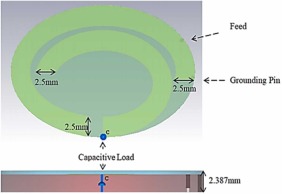
Researchers from the MIT Media Lab have developed an antenna — about the size of a fine grain of sand — that can be injected into the body to wirelessly power deep-tissue medical implants, such as pacemakers in cardiac patients and neuromodulators in people suffering from epilepsy or Parkinson’s disease.“This is the next major step in miniaturizing deep-tissue implants,” says Baju Joy, a PhD student in the Media Lab’s Nano-Cybernetic Biotrek research group. “It enables battery-free implants that can be placed with a needle, instead of major surgery.”A paper detailing this work was published in the October issue of IEEE Transactions on Antennas and Propagation. Joy is joined on the paper by lead author Yubin Cai, PhD student at the Media Lab; Benoît X. E. Desbiolles and Viktor Schell, former MIT postdocs; Shubham Yadav, an MIT PhD student in media arts and sciences; David C. Bono, an instructor in the MIT Department of Materials Science and Engineering; and senior author Deblina Sarkar, the AT&T Career Development Associate Professor at the Media Lab and head of the Nano-Cybernetic Biotrek group.Deep-tissue implants are currently powered either with a several-centimeters-long battery that is surgically implanted in the body, requiring periodic replacement, or with a surgically placed magnetic coil, also of a centimeter-scale size, that can harvest power wirelessly. The coil method functions only at high frequencies, which can cause tissue heating, limiting how much power can be safely delivered to the implant when miniaturized to sub-millimeter sizes.“After that limit, you start damaging the cells,” says Joy.As is stated in the team’s IEEE Transactions on Antennas and Propagation paper, “developing an antenna at ultra-small dimensions (less then 500 micrometers) which can operate efficiently in the low-frequency band is challenging.”The 200-micrometer antenna — developed through research led by Sarkar — operates at low frequencies (109 kHz) thanks to a novel technology in which a magnetostrictive film, which deforms when a magnetic field is applied, is laminated with a piezoelectric film, which converts deformation to electric charge. When an alternating magnetic field is applied, magnetic domains within the magnetostrictive film contort it in the same way that a piece of fabric interwoven with pieces of metal would contort if subjected to a strong magnet. The mechanical strain in the magnetostrictive layer causes the piezoelectric layer to generate electric charges across electrodes placed above and below.“We are leveraging this mechanical vibration to convert the magnetic field to an electric field,” Joy says.Sarkar says the newly developed antenna delivers four to five orders of magnitude more power than implantable antennas of similar size that rely on metallic coils and operate in the GHz frequency range.“Our technology has the potential to introduce a new avenue for minimally invasive bioelectric devices that can operate wirelessly deep within the human body,” she says.The magnetic field that activates the antenna is provided by a device similar to a rechargeable wireless cell phone charger, and is small enough to be applied to the skin as a stick-on patch or slipped into a pocket close to the skin surface.Because the antenna is fabricated with the same technology as a microchip, it can be easily integrated with already-existing microelectronics.“These electronics and electrodes can be easily made to be much smaller than the antenna itself, and they would be integrated with the antenna during nanofabrication,” Joy says, adding that the researchers’ work leverages 50 years of research and development applied to making transistors and other electronics smaller and smaller. “The other components can be tiny, and the entire system can be placed with a needle injection.”Manufacture of the antennas could be easily scaled up, the researchers say, and multiple antennas and implants could be injected to treat large areas of the body.Another possible application of this antenna, in addition to pacemaking and neuromodulation, is glucose sensing in the body. Circuits with an optical sensor for detecting glucose already exist, but the process would benefit greatly with a wireless power supply that can be non-invasively integrated inside of the body.“That’s just one example,” Joy says. “We can leverage all these other techniques that are also developed using the same fabrication methods, and then just integrate them easily to the antenna.”

Tags: Science
David Lee

David Lee

Read More

A better way to model the behavior of metal alloys

19 June 2026

MIT in the media: For the future of tech, “Massachusetts can absolutely lead”

18 June 2026
  • Trending
  • Comments
  • Latest
Clarivate Releases Journal Citation Reports 2026

Clarivate Releases Journal Citation Reports 2026

17 June 2026

HKICPA Supports Government Plan to Boost Corporate Treasury Centres in Hong Kong

12 June 2026
Jabs urged as doctors fear flu season overlap

Ping An Good Doctor Upgrades AI Health Service to Cover 90 Million Monthly Users

17 June 2026

Fluorescent nanosensor enables rapid, first-of-its-kind detection of key gut health biomarker

15 June 2026
Xia Baolong concludes HK inspection

Xia Baolong concludes HK inspection

17 June 2026

Iran deal ‘not final’, says Trump

17 June 2026

Seven Perfect Shuffles Randomize a Deck of Cards. But How Many Sloppy Ones?

17 June 2026
AXI SECURES FSC MAURITIUS LICENCE, BRINGING REGULATED TRADING TO THE WORLD’S FASTEST-GROWING MARKETS

AXI SECURES FSC MAURITIUS LICENCE, BRINGING REGULATED TRADING TO THE WORLD’S FASTEST-GROWING MARKETS

17 June 2026

Recent News

Xia Baolong concludes HK inspection

Xia Baolong concludes HK inspection

17 June 2026

Iran deal ‘not final’, says Trump

17 June 2026

Seven Perfect Shuffles Randomize a Deck of Cards. But How Many Sloppy Ones?

17 June 2026
AXI SECURES FSC MAURITIUS LICENCE, BRINGING REGULATED TRADING TO THE WORLD’S FASTEST-GROWING MARKETS

AXI SECURES FSC MAURITIUS LICENCE, BRINGING REGULATED TRADING TO THE WORLD’S FASTEST-GROWING MARKETS

17 June 2026
HK Businesswire

Stay ahead with the latest insights on Hong Kong’s economy, finance, and investments. From market trends to policy updates, we bring you in-depth analysis and expert opinions.

📩 Subscribe to our newsletter for exclusive updates.
📍 Follow us on social media for real-time news.
📧 Contact us: info@hongkong-invest.com

Follow Us

  • About
  • Advertise
  • Privacy & Policy
  • Contact

© 2025 by HKBusinesswire.com

No Result
View All Result

© 2025 by HKBusinesswire.com