








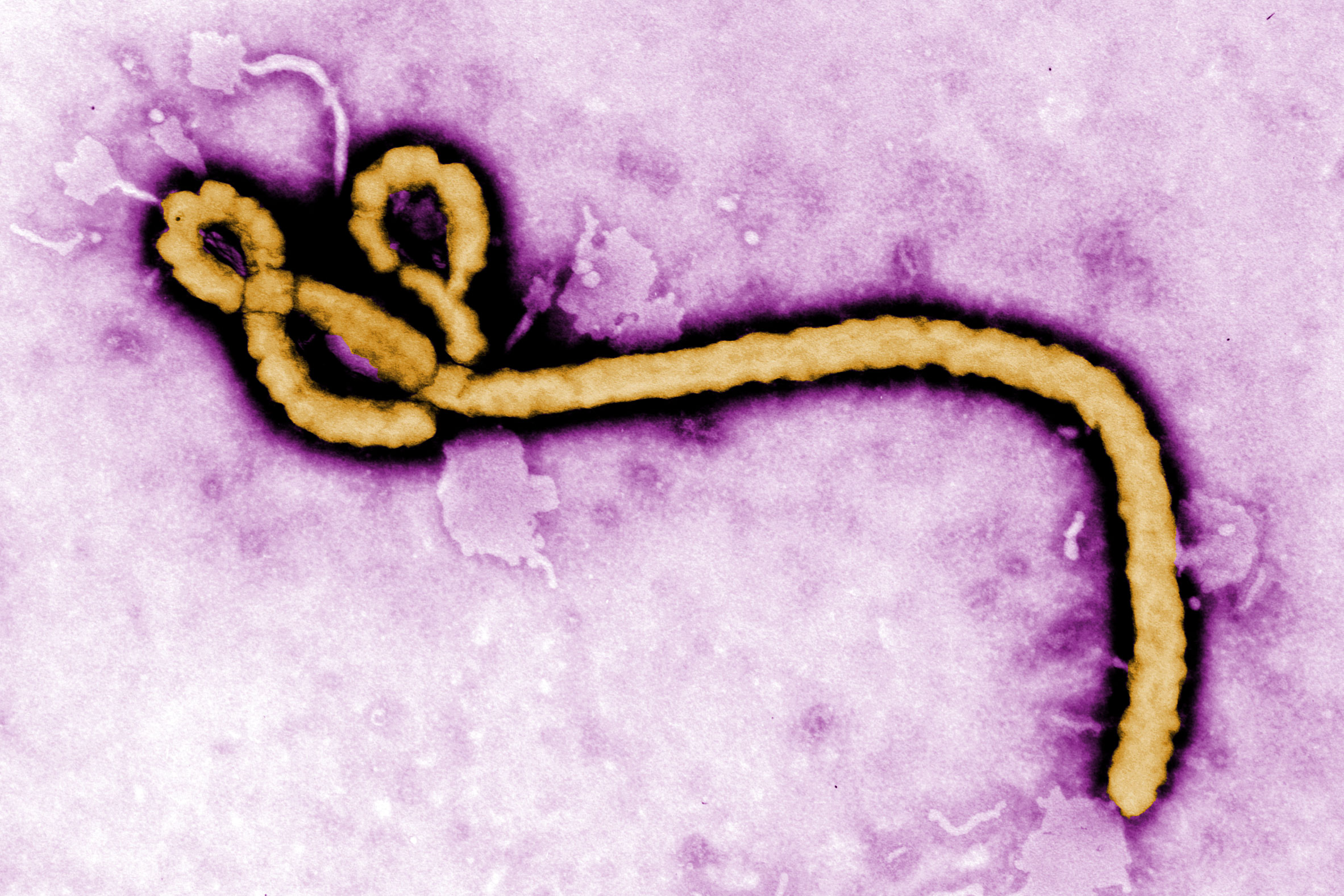
The following press release was issued today by the Broad Institute of MIT and Harvard.Although outbreaks of Ebola virus are rare, the disease is severe and often fatal, with few treatment options. Rather than targeting the virus itself, one promising therapeutic approach would be to interrupt proteins in the human host cell that the virus relies upon. However, finding those regulators of viral infection using existing methods has been difficult and is especially challenging for the most dangerous viruses like Ebola that require stringent high-containment biosafety protocols.Now, researchers at the Broad Institute and the National Emerging Infectious Diseases Laboratories (NEIDL) at Boston University have used an image-based screening method developed at the Broad to identify human genes that, when silenced, impair the Ebola virus’s ability to infect. The method, known as optical pooled screening (OPS), enabled the scientists to test, in about 40 million CRISPR-perturbed human cells, how silencing each gene in the human genome affects virus replication.Using machine-learning-based analyses of images of perturbed cells, they identified multiple host proteins involved in various stages of Ebola infection that when suppressed crippled the ability of the virus to replicate. Those viral regulators could represent avenues to one day intervene therapeutically and reduce the severity of disease in people already infected with the virus. The approach could be used to explore the role of various proteins during infection with other pathogens, as a way to find new drugs for hard-to-treat infections.The study appears in Nature Microbiology.“This study demonstrates the power of OPS to probe the dependency of dangerous viruses like Ebola on host factors at all stages of the viral life cycle and explore new routes to improve human health,” said co-senior author Paul Blainey, a Broad core faculty member and professor in the Department of Biological Engineering at MIT.Previously, members of the Blainey lab developed the optical pooled screening method as a way to combine the benefits of high-content imaging, which can show a range of detailed changes in large numbers of cells at once, with those of pooled perturbational screens, which show how genetic elements influence these changes. In this study, they partnered with the laboratory of Robert Davey at BU to apply optical pooled screening to Ebola virus.The team used CRISPR to knock out each gene in the human genome, one at a time, in nearly 40 million human cells, and then infected each cell with Ebola virus. They next fixed those cells in place in laboratory dishes and inactivated them, so that the remaining processing could occur outside of the high-containment lab.After taking images of the cells, they measured overall viral protein and RNA in each cell using the CellProfiler image analysis software, and to get even more information from the images, they turned to AI. With help from team members in the Eric and Wendy Schmidt Center at the Broad, led by study co-author and Broad core faculty member Caroline Uhler, they used a deep learning model to automatically determine the stage of Ebola infection for each single cell. The model was able to make subtle distinctions between stages of infection in a high-throughput way that wasn’t possible using prior methods.“The work represents the deepest dive yet into how Ebola virus rewires the cell to cause disease, and the first real glimpse into the timing of that reprogramming,” said co-senior author Robert Davey, director of the National Emerging Infectious Diseases Laboratories at Boston University, and professor of microbiology at BU Chobanian and Avedisian School of Medicine. “AI gave us an unprecedented ability to do this at scale.”By sequencing parts of the CRISPR guide RNA in all 40 million cells individually, the researchers determined which human gene had been silenced in each cell, indicating which host proteins (and potential viral regulators) were targeted. The analysis revealed hundreds of host proteins that, when silenced, altered overall infection level, including many required for viral entry into the cell.Knocking out other genes enhanced the amount of virus within inclusion bodies, structures that form in the human cell to act as viral factories, and prevented the infection from progressing further. Some of these human genes, such as UQCRB, pointed to a previously unrecognized role for mitochondria in the Ebola virus infection process that could possibly be exploited therapeutically. Indeed, treating cells with a small molecule inhibitor of UQCRB reduced Ebola infection with no impact on the cell’s own health.Other genes, when silenced, altered the balance between viral RNA and protein. For example, perturbing a gene called STRAP resulted in increased viral RNA relative to protein. The researchers are currently doing further studies in the lab to better understand the role of STRAP and other proteins in Ebola infection and whether they could be targeted therapeutically.In a series of secondary screens, the scientists examined some of the highlighted genes’ roles in infection with related filoviruses. Silencing some of these genes interrupted replication of Sudan and Marburg viruses, which have high fatality rates and no approved treatments, so it’s possible a single treatment could be effective against multiple related viruses.The study’s approach could also be used to examine other pathogens and emerging infectious diseases and look for new ways to treat them.“With our method, we can measure many features at once and uncover new clues about the interplay between virus and host, in a way that’s not possible through other screening approaches,” said co-first author Rebecca Carlson, a former graduate researcher in the labs of Blainey and Nir Hacohen at the Broad and who co-led the work along with co-first author J.J. Patten at Boston University.This work was funded in part by the Broad Institute, the National Human Genome Research Institute, the Burroughs Wellcome Fund, the Fannie and John Hertz Foundation, the National Science Foundation, the George F. Carrier Postdoctoral Fellowship, the Eric and Wendy Schmidt Center at the Broad Institute, the National Institutes of Health, and the Office of Naval Research.

Scientists apply optical pooled CRISPR screening to identify potential new Ebola drug targets

- Trending
- Comments
- Latest








Stay ahead with the latest insights on Hong Kong’s economy, finance, and investments. From market trends to policy updates, we bring you in-depth analysis and expert opinions.
📩 Subscribe to our newsletter for exclusive updates.
📍 Follow us on social media for real-time news.
📧 Contact us: info@hongkong-invest.com